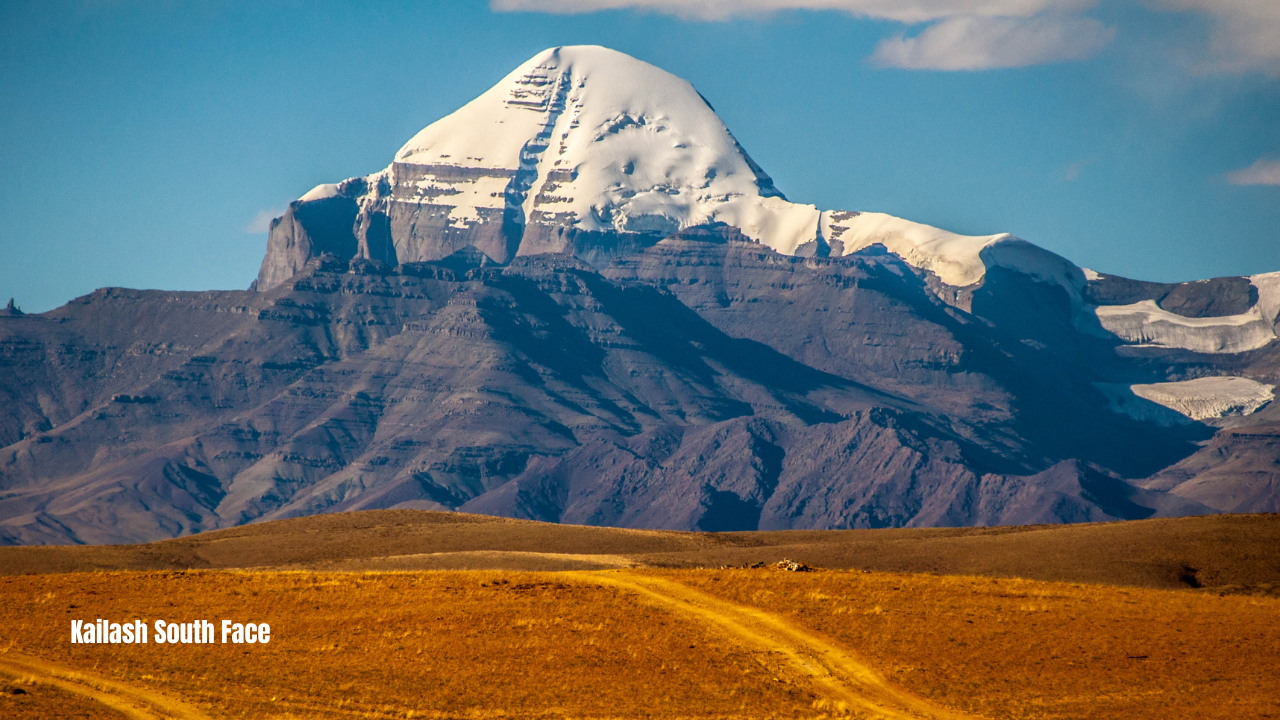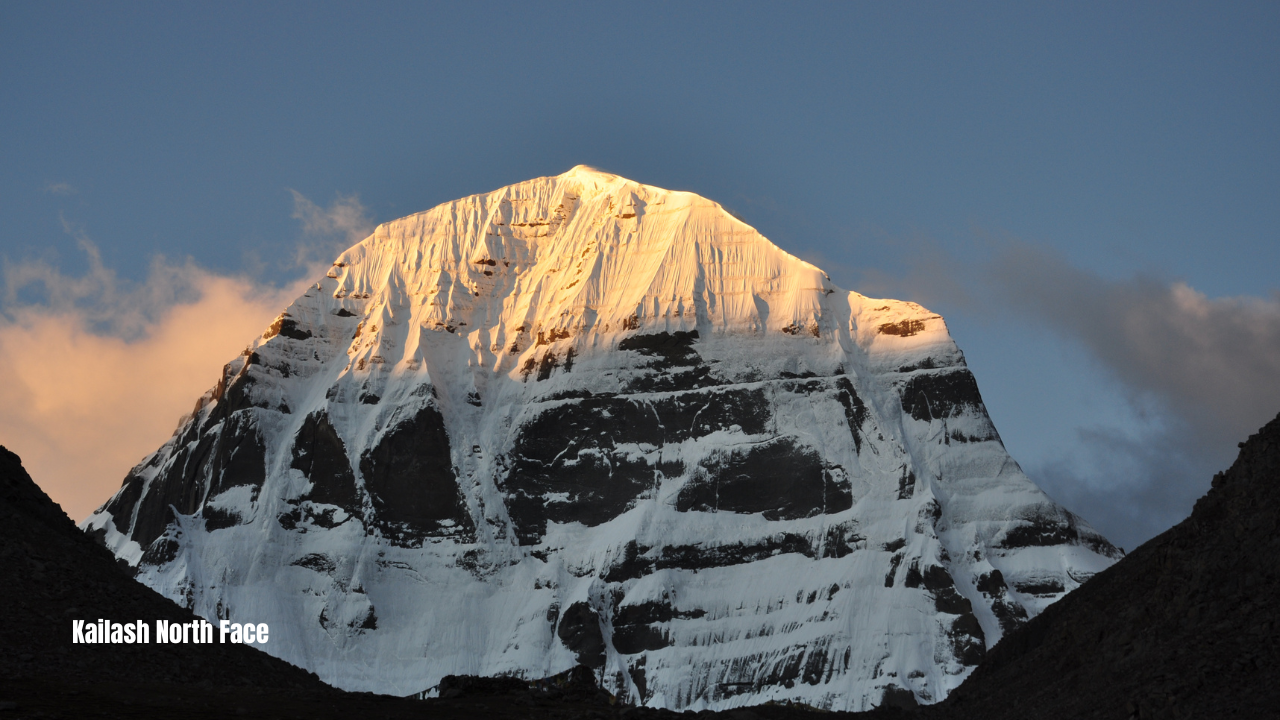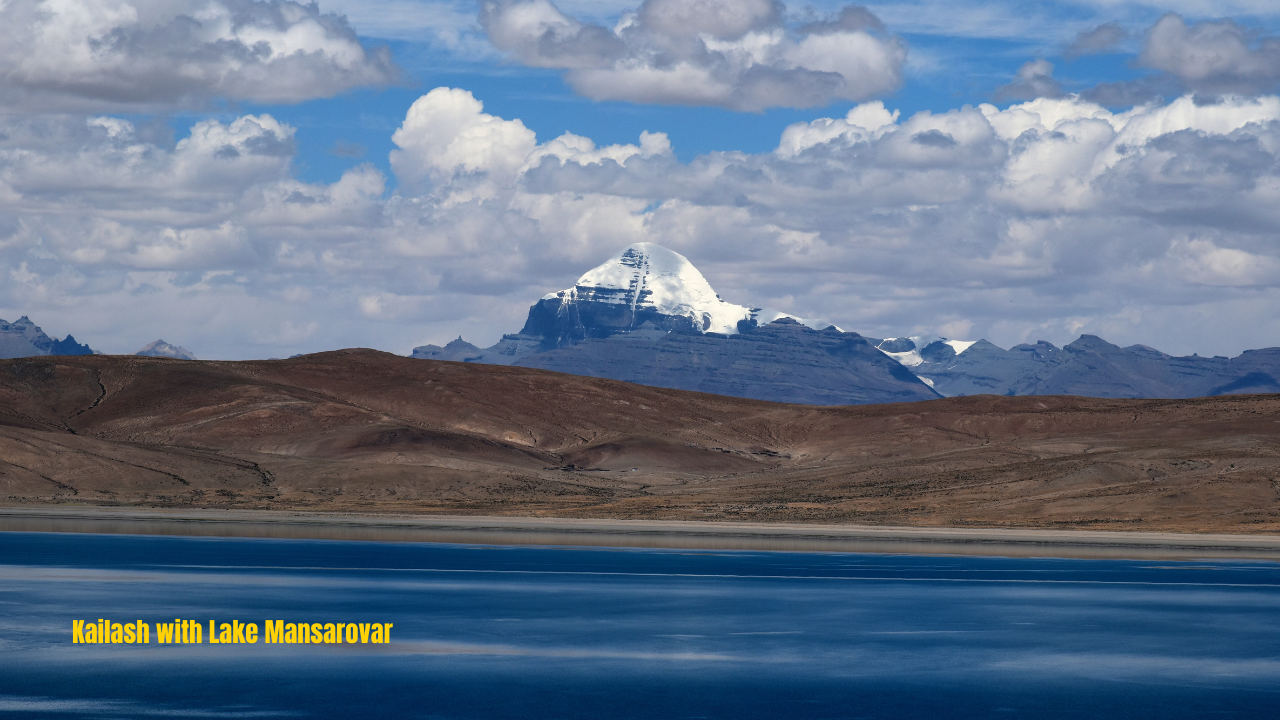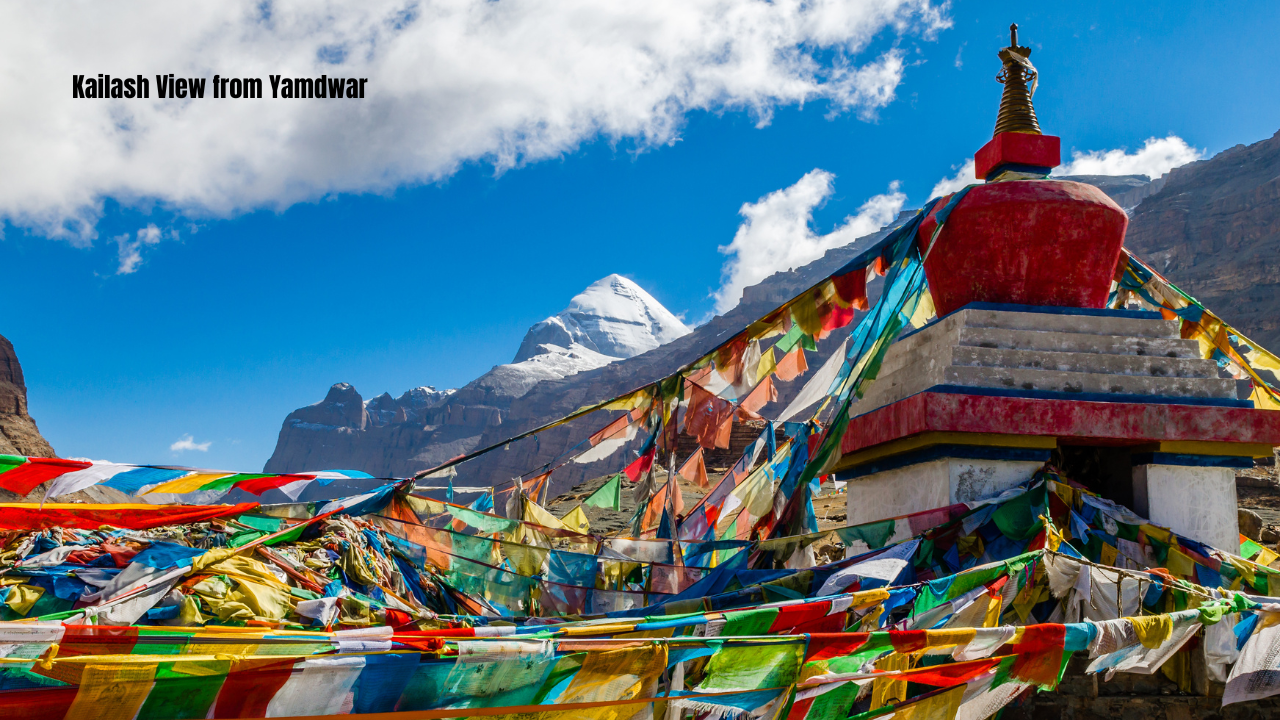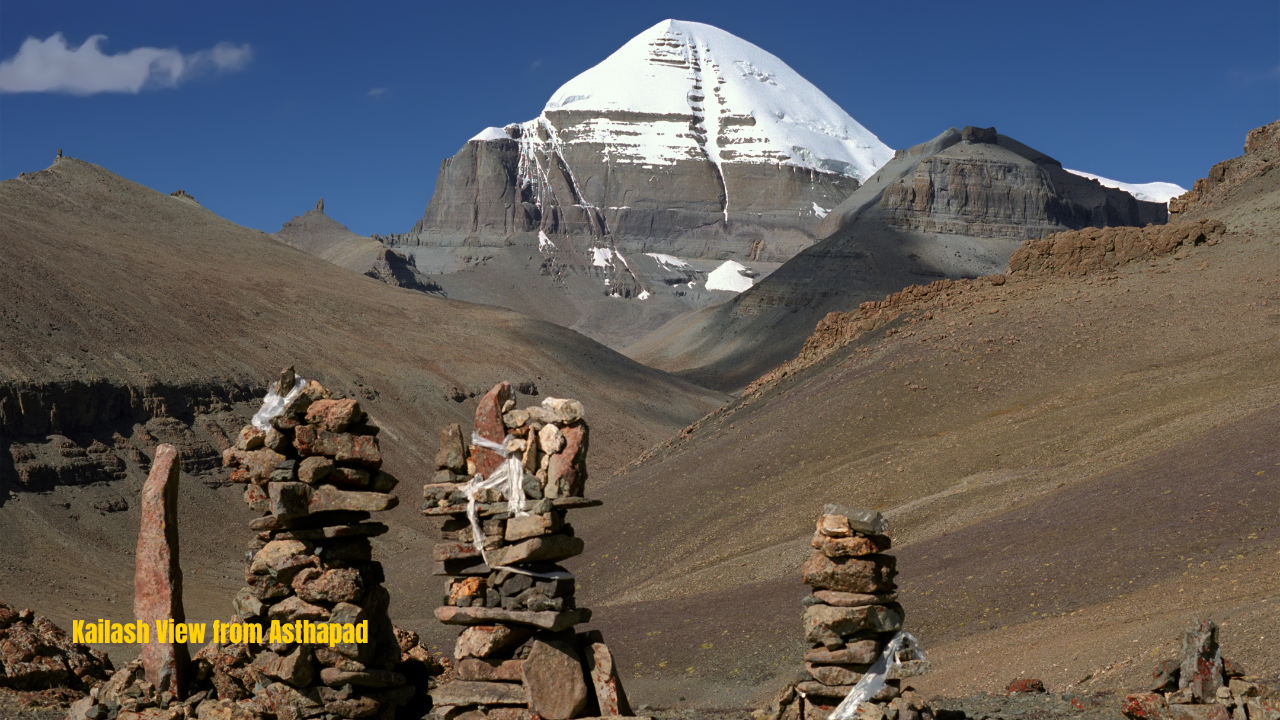
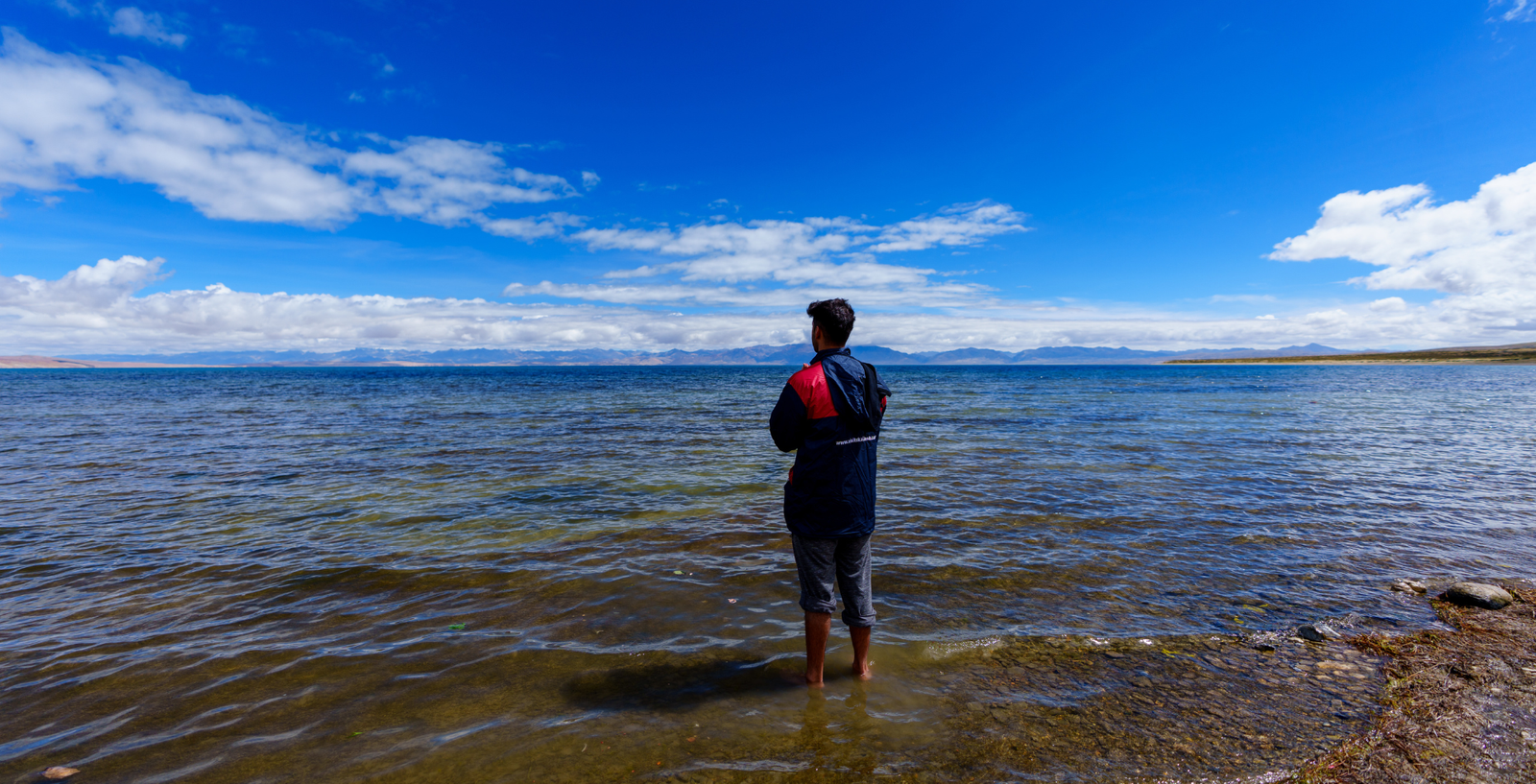
Lake Mansarovar exists as one of the world's most sacred and pure lakes within Tibet's distant and peaceful natural environment. The freshwater lake located near Mount Kailash holds great religious value for Hindus and Buddhists and Jains and Bon followers.
The ancient holy texts and traditional stories describe how Lord Brahma first imagined Lake Mansarovar, which explains why people named the lake "Manas" because "Manas" means "mind" and "Sarovar" means "lake".
For centuries, devotees have taken difficult paths through mountains and plains to reach its sacred waters, which they believe possess the power to remove all their sins after one brief immersion.
The lake provides visitors with more than its religious value because they can enjoy its natural beauty, which includes changing colors, snow-covered mountain reflections, and the peaceful natural sounds that match the unchanging flow of time.
The combination of its clear waters and snow-covered mountains and high-altitude desert areas creates a stunning view which attracts both pilgrims and travelers. The lake serves as a sacred site but also provides a tranquil space for nature enthusiasts who want to escape from the noisy world.
Where is Lake Mansarovar Located?
Lake Mansarovar (Mapam Yumtso) is situated in the isolated Ngari Prefecture of Tibet at approximately 4,650 meters above sea level. Surrounding the lake is the Trans-Himalayan region, with its approximately 90 kilometer long shore and 320 square kilometer area.
Its water comes primarily from melting snow and natural springs, and the lake is considered significant geographically since it is linked with the rivers Brahmaputra, Indus, Sutlej, and Karnali that are the main rivers of Asia.
The lake is home to varied flora and fauna and is a temporary home for migrating birds like swans and geese during winters. Due to its geographical, ecological, and religious significance combined, Lake Mansarovar is a place where pilgrims, scientists, and tourists from different parts of the world come together to visit.
Geography and Ecology
Lake Mansarovar is of great geographical importance, as it is closely associated with the rivers of Asia. It is said to be the starting point for the Brahmaputra, Indus, Sutlej, and Karnali rivers. These rivers are of great importance to Asia's agrarian, cultural and economic activities; thus the lake is indirectly of great importance to human survival.
The lake is home to a high-altitude ecosystem that is both delicate and distinctive. The low oxygen levels and freezing temperatures that characterize the lake's environment are not conducive to the growth of many living things, but some species have developed very specific adaptations for this type of environment.
Lake Mansarovar is an essential temporary shelter for migratory birds also. During the migration periods, the lake attracts the swans, geese, and ducks that use the lake as a place to rest and feed. The bird numbers are a factor in maintaining the ecological balance of the area and they also depict the lake's significance in the intercontinental wildlife movement support.
Significance
Lake Mansarovar serves as a sacred site which holds cultural significance for multiple religious groups. The site displays its spiritual nature through its pure water and its magnificent mountain ranges.
Religious Significance
The lake is a prominent part of the visit in Kailash Mansarovar Yatra, a sacred journey considered significant among four religions; Hinduism, Buddhism, Jains and Bon followers.
Significance in Hinduism
The Hindu sacred Lake Mansarovar, was believed to have been created by Lord Brahma according to Hindu belief. Hindus believe that the water from the lake brings pure cleansing powers which help people to achieve moksha through bathing or drinking. The sacred site marks the birthplace of the Indus River, Sutlej River, Brahmaputra River, and Karnali River while it serves as a sacred connection to Lord Shiva.
Significance in Buddhism and Bon
The lake serves as Anotatta in both Buddhism and Bon, which represents their purest state. The beliefs state that the Maya Queen of Maya performed her bathing ritual at this location before she gave birth to Buddha. Pilgrims worship the lake while they visit Chiu Gompa and complete their sacred walking path.
Significance in Jainism
Jains refer to the lake as Padma Hrada because they believe Rishabhanatha, their first Tirthankara, attained nirvana at this location. The site serves as a holy place which enables devotees to connect with their fundamental spiritual heritage.
Value as a natural attraction
At an elevation of 4650 metres, this pristine lake shines brighter than any other lake. As one of the highest fresh water lakes, one can see the lake being surrounded by beautiful mountain ranges, the most impressive of which is Mount Kailash. The high plateau setting, the thin air, and the unspoiled nature add to the lake's far-off and peaceful aura. The natural beauty of the area includes migratory birds and unique plant species and the snow-capped mountains which reflect in the lake's clear waters, which creates a spiritual site and a natural photography haven.
Cultural Significance
Lake Mansarovar exists as a dynamic hub of cultural heritage. The site serves as a meeting point for pilgrims and monks and local residents and visitors from different areas who continue to practice the ancient customs and ceremonial traditions which have existed for many centuries. The lake serves as a uniting symbol which represents faith and the fundamental connection between human culture and nature.
Rivers Originating from Lake Mansarovar
Lake Mansarovar covers an area of approximately 320 square kilometers which serves as a large water reservoir. The lake's water flows out to Rakshas Taal where it connects to the origins of major holy rivers.
|
Tibetan Name |
English Translation |
Indian Name |
Side of the Lake it flows |
|
Langchen Khambab |
River coming out of the mouth of an elephant |
Sutlej |
West |
|
Mapcha Khambab |
River coming out of the mouth of a peacock |
Karnali |
South |
|
Tamchok Khambab |
River coming out of the mouth of a horse |
Brahmaputra |
East |
|
Senge Khambab |
River coming out of the mouth of a lion |
Indus |
North |
How to reach Lake Mansarovar?
There are multiple ways that one can reach Lake Mansarovar in Tibet which is a part of holy Kailash Mansarovar Yatra. The main factor that determines how you reach this lake is actually the Kailash Mansarovar Yatra Package you choose.
Each package follows a different route which needs to cross the border via Nepal for Indian travellers, however, for foreigners one can directly travel to Lhasa.
By Drive via Kyirong
For this route, one needs to arrive in Nepal and cross the border from Kyirong. From Kyirong one can reach Mansarovar via Saga with a total distance of about 645 KM. For both parts the transport is either bus/jeep according to the group size and travel type (private/group).
By Helicopter via Hilsa
The Hilsa route includes transport by flight and heli until you enter Tibetan territory. Starting from the border you will drive 27 KM north east to Taklakot, a transit and acclimatization spot, where you will stay for 2 nights. Continuing your journey you will finally reach Mansarovar which is about 70 KM from Taklakot.
By Flight via Lhasa
This route is a little different than the other two. Here you will first have to reach Lhasa which is going to be the actual starting point of your Lake Mansarovar journey.
There are two variations possible to reach Lhasa: a direct flight to Tibet via mainland China and a direct flight to Tibet via Nepal.
From Lhasa you will pass several towns like Shigatse, Tingri and Saga until you reach the Lake covering around 1250 KM over the period of 4 days.
Note: Due to difficult visa processing for the Indian travellers, this route is only for NRIs/foreign nationals.
Learn More: How to reach Kailash Mansarovar
Accommodations
At an elevation of 4, 650 m the accommodation facility at lake Mansarovar is very limited. Unlike other towns before reaching the lake like Saga, Kyriong which has star rated hotels, Mansarovar doesn’t provide such facilities.
There are only basic guest houses/lodges where individuals have to adjust in a single room on a 5-7 person sharing basis. Additionally, the most challenging part of the accommodation here is the washroom. It can be said that there is no washroom at all. Here, you are free to use nature for nature’s call. So, the travelers are advised to carry personal hygiene items like tissues, wet tissues, and sanitizers on their own.
Best Time to Visit
The pilgrimage season for Lake Mansarovar occurs during specific months which limit its duration to five months every year from May to September only. The rest of the months which are winters present their most severe conditions when temperatures fall below freezing and invites heavy snowfall that creates dangerous travel conditions.
In between these 5 months, the best time depends upon factors like seasonal preferences, full moon dates and individuals time scheduling. The early opening months like May and June are the most preferred by the most pilgrims. Relatively, the weather remains stable during these months.
The next two months of July and August invite light rainfalls making the journey a little bit difficult. Lastly, the month of September has clear weather while also having less crowd as it is the ending season.
Additionally, the time of full moon invites a large number of crowds in terms of religious significance. Hence, the idea of best time is totally dependent upon individual preference.
In details: Best time to visit Kailash Mansarovar
Difficulty
The journey to Lake Mansarovar which is generally part of the holy Kailash yatra rather than a visit to the lake alone is quite difficult even though reaching there is all about driving from the border.
The high altitude is the main difficulty one must face to visit the Lake. Despite acclimatization being arranged in most of the itinerary, travellers cross pass an average of 5000 in vehicles which can lead to altitude sickness. The long hours of driving are already exhausting while also high altitude added to it can be challenging.
Regarding the difficulty in terms of facilities nearby the Lake one must adjust in an accommodation facility which is very basic with no washrooms and in terms of room sharing one must stay in a 5-7 person sharing basis. Moreover, medical facilities are rare throughout the area and there exist few ways to carry out emergency medical evacuations.
To avoid the problems regarding the health problems, pilgrims must undergo health screenings before being allowed to undertake the yatra and should prepare physically through regular exercise and breathing practices. Mental endurance is equally essential because of the combination of extreme environmental conditions and limited available resources.
In details: How difficult is the Kailash Mansarovar Yatra
Conclusion
Lake Mansarovar stands as a breathtaking natural wonder which provides visitors with an experience that touches their inner being. The tranquil waters of the lake which are situated nearby the holy Mount Kailash and its natural scenery serve as a reminder that human beings share a fundamental bond with their natural surroundings.
It provides one of the rarest experiences on Earth where visitors can experience an atmosphere which resembles the delicate boundary between material existence and spiritual realms. As said by many travellers, the lake creates a permanent emotional bond which remains with people even after they have left the place.
Lake Mansarovar Facts
|
Site |
Lake Mansarovar |
|
Tibetan Name |
Mapam Yumtso |
|
Chinese Name |
Mapang Yongcuo |
|
Type |
Freshwater Lake |
|
Location |
Tibet |
|
Altitude |
4650 m |
|
Area |
320 km² |
|
Depth |
100 m |
|
Circumference |
82 km |
|
Reverence |
|
|
Distributary Rivers |
|
|
Flora |
|
|
Fauna |
|
Where is Lake Mansarovar?
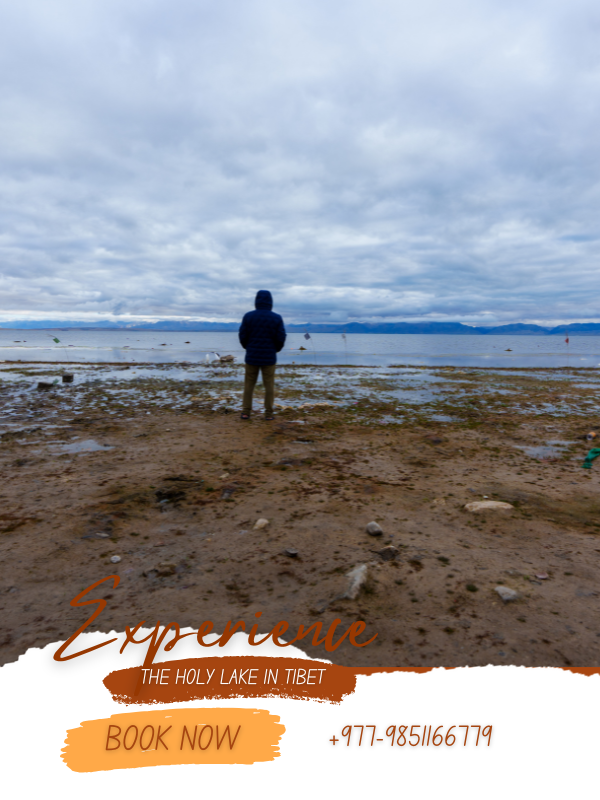
Lake Mansarovar, referred to by locals as Mapam Yumtso, is located in the isolated Ngari Prefecture of the Tibet Autonomous Region, China. The lake, at an elevation of approximately 4,650 metres above sea level, is in a very isolated and rugged part of the Trans-Himalayan region.
It covers an estimated area of 320 square kilometres, and its perimeter is almost 90 kilometres. The lake, however, is surrounded with harsh features, but its bright blue waters and peacefulness turn it into one of the most gorgeous nature spots in Asia.
From the geographical viewpoint, Lake Mansarovar gets its water primarily from melting snow and springs, and its water stays very fresh even though the lake is at a very high elevation.
In addition, the lake is also known as the source of four of the largest rivers in Asia: the Brahmaputra, Indus, Sutlej, and Karnali (Ganges), sustaining a large number of people. Situated right next to it is Lake Rakshastal, a lake with salty water, considered inauspicious, which together presents a beautiful contrast of good and evil.
Beyond the religious and geographical importance, it also holds a considerable ecological value. Lake Mansarovar is depicted as heavenly for being home to rich flora and fauna. During certain times of the year, the plains around the lake become the habitat for migratory birds, particularly swans and geese.
Hence, the lake presents significant value from a geographical, ecological and religious perspective despite its high altitude, making it a popular tourism site for pilgrims, researchers, and tourists from every part of the world.
Kailash Mansarovar Yatra Packages
The cost of the Kailash Mansarovar Yatra packages varies based on the mode of transportation (driving, airplane, helicopter), accommodation in Nepal and Tibet, group size, and additional services provided by the operator. In our case, our packages range from USD 3000 to USD 6000, and they might include a group trip or a private travel via Lhasa to Mount Everest Base Camp.
Lake Mansarovar Yarta Faqs
Kailash Mansarovar Yatra Video